Mastr Byldr is an AI-driven B2B management platform designed to transform how real estate developers, construction managers, and property stakeholders collaborate. The platform consolidates project tracking, compliance, communication, and property data management into a single, intuitive dashboard. At its core, Mastr Byldr uses AI-powered insights to reduce operational bottlenecks, automating property updates, reconciling compliance issues, and enabling seamless collaboration between developers, architects, contractors, and homebuyers.
YEAR
2024
ROLE
PRODUCT DESIGNER
SERVICES
PRODUCT DESIGN
UX RESEARCH
PRODUCT STRATEGY
UI DESIGN
About the project
Problem
Real estate and construction projects are notorious for:
Fragmented communication across multiple stakeholders.
Manual tracking of compliance, codes, and design updates.
Delayed approvals due to poor visibility of ongoing work.
Data silos, making it hard to track property performance at scale.
This often results in budget overruns, missed deadlines, and dissatisfied buyers.
Solution
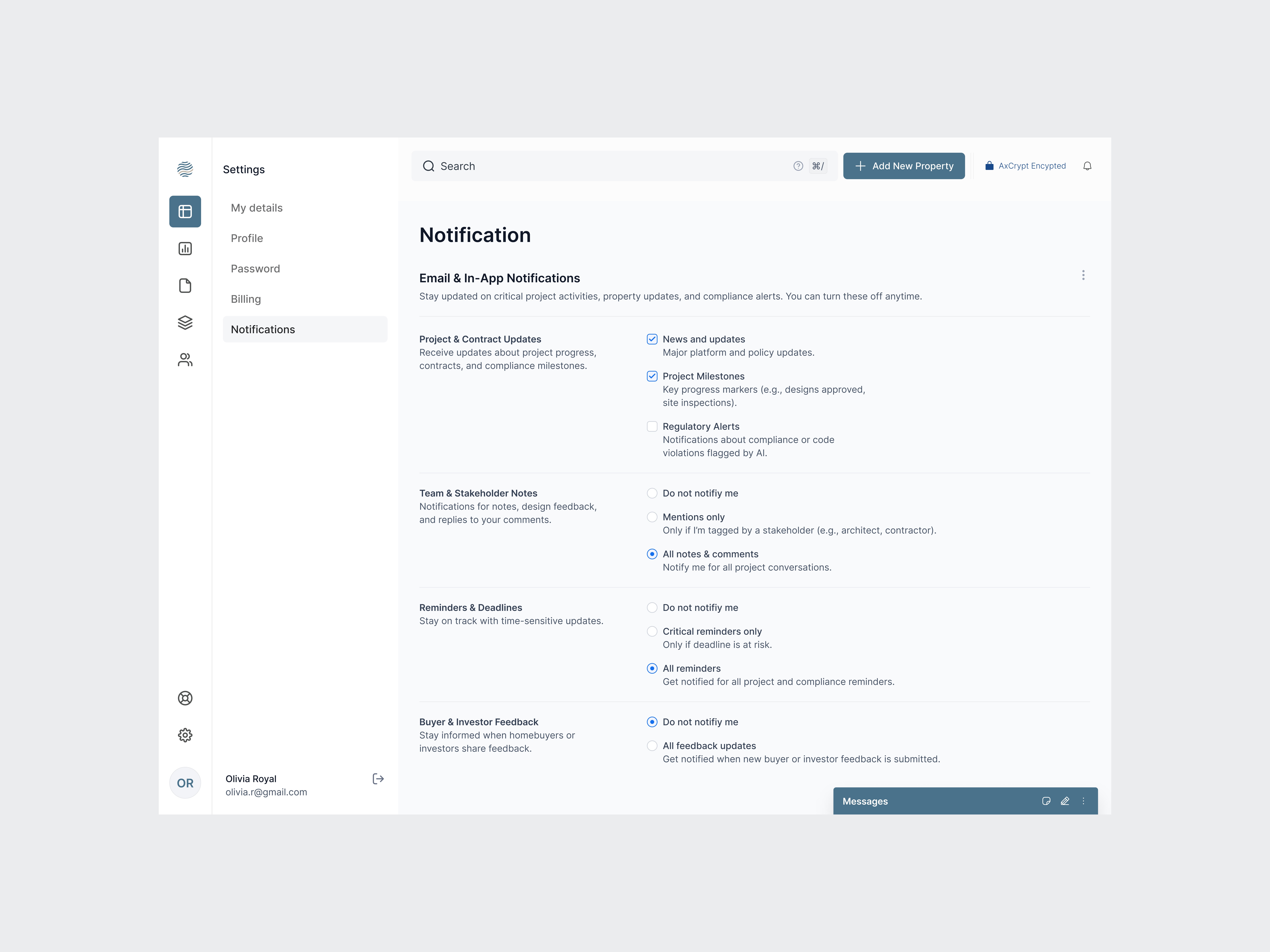
Mastr Byldr addresses these pain points through a centralized AI-powered management hub:
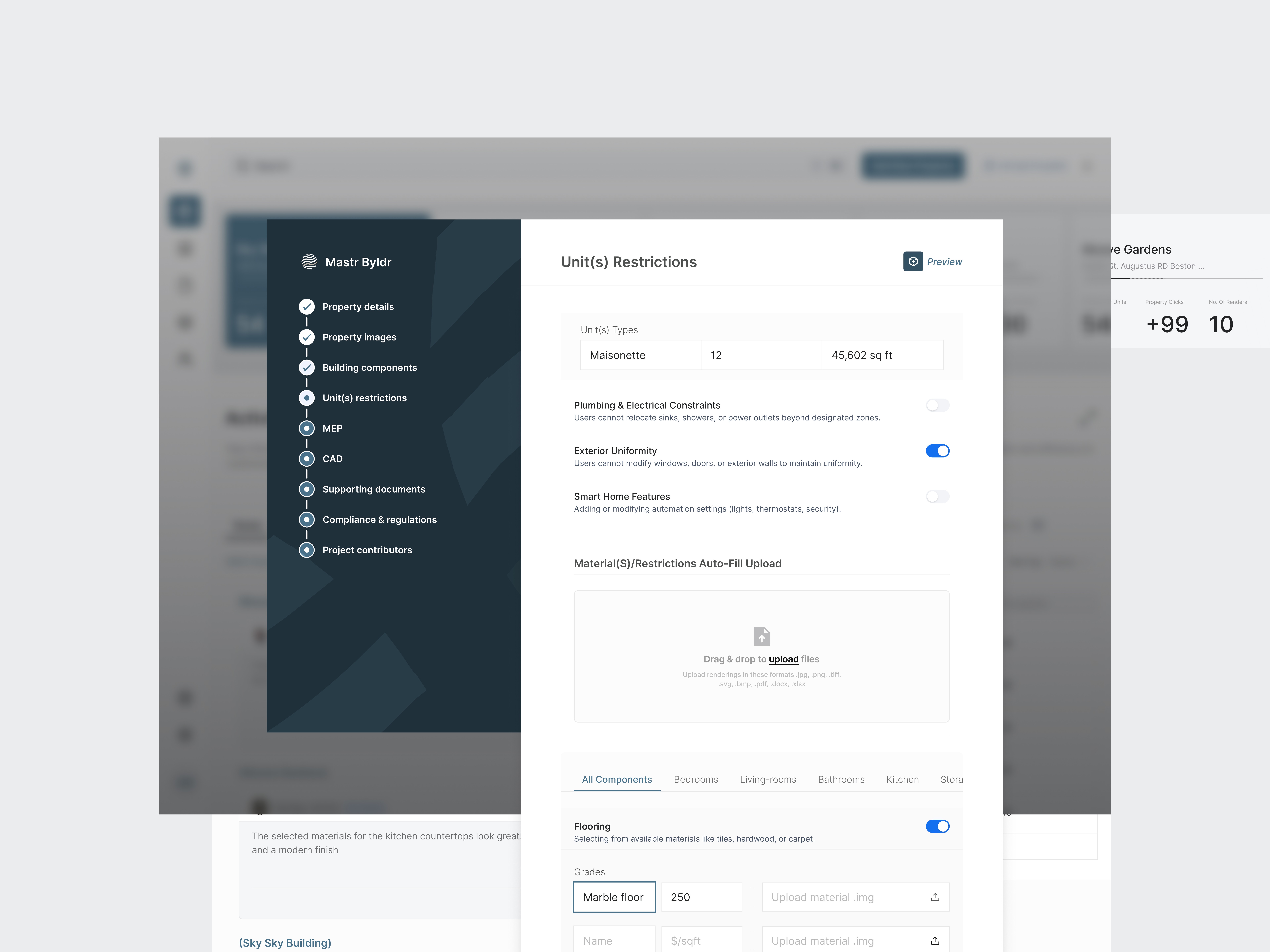
Unified Dashboard: Tracks multiple properties and projects in real time.
AI-Powered Updates: Summarizes compliance risks, buyer feedback, and project milestones.
Smart Collaboration: Bridges communication gaps between homebuyers, architects, and developers.
Seamless Data Flow: Replaces spreadsheets and email chains with structured, actionable insights.
UX Audit
1. Navigation & Information Architecture
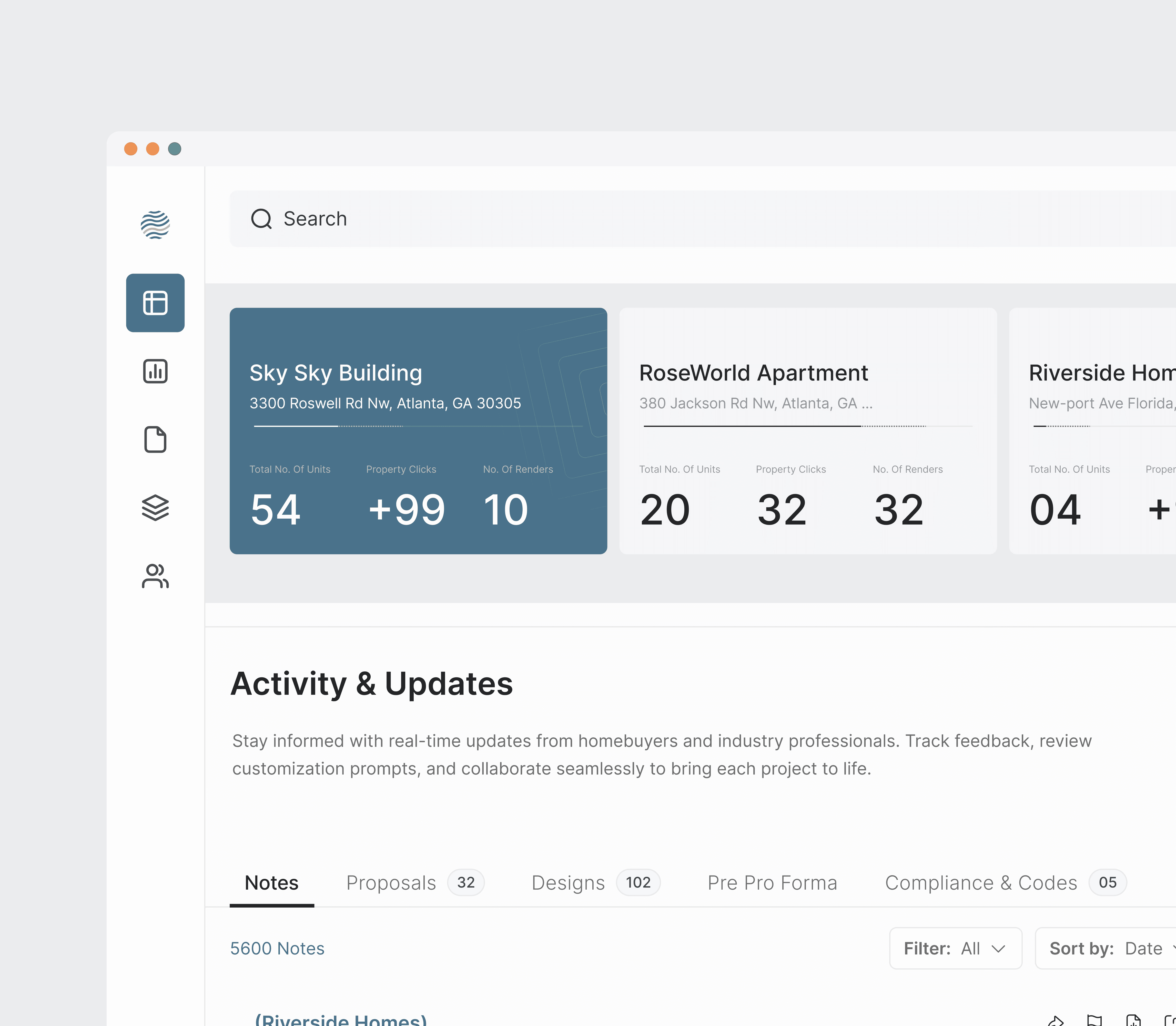
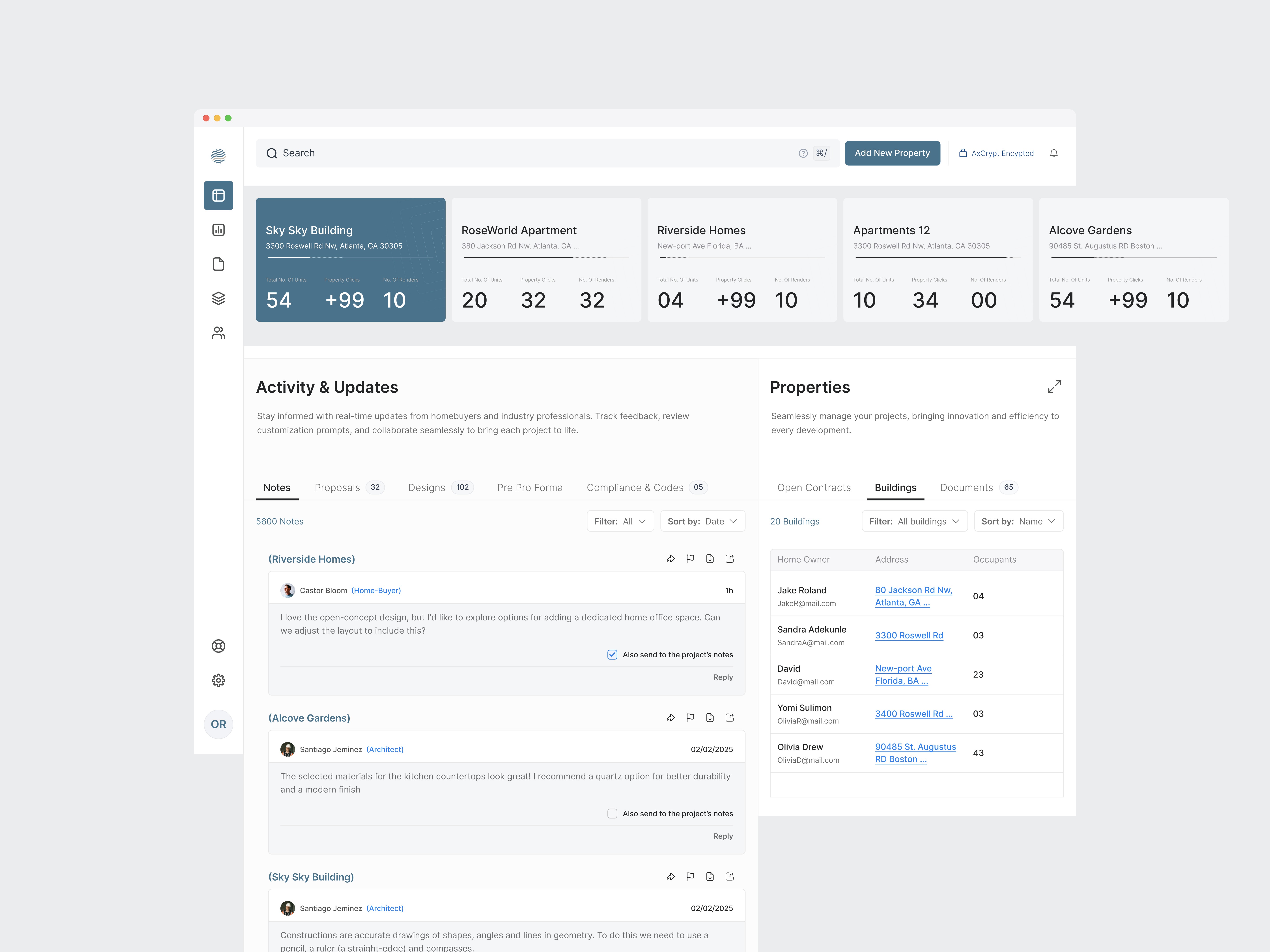
Clean dashboard layout with cards for each property (Sky Sky Building, Riverside Homes, etc.) makes it easy for managers to scan and prioritize.
Progress indicators (+99 tasks, compliance counts, occupants) reduce cognitive load, allowing users to see project health at a glance.
Search & Filters ensure quick retrieval of notes, contracts, and updates.
✅ Impact: Reduces time-to-information, helping managers focus on decisions rather than hunting data.
2. Activity & Updates Stream
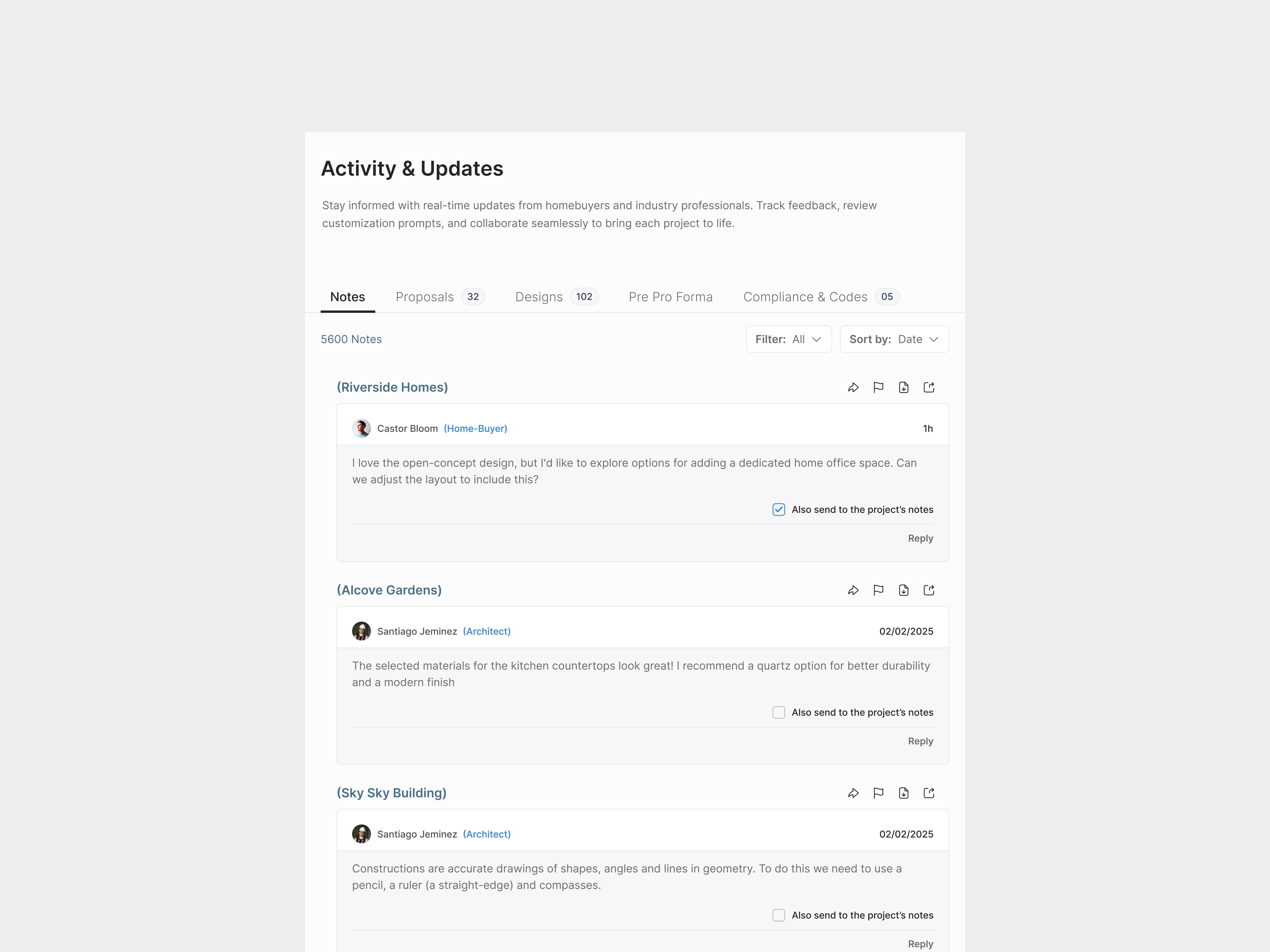
Integrated feedback loops allow homebuyers (e.g., Castor Bloom’s comment) and professionals (architect Santiago’s material suggestion) to collaborate in real time.
Contextual tagging (Home-Buyer, Architect) improves trust and clarity in stakeholder roles.
✅ Impact: Encourages transparency, speeds up decision-making, and fosters stronger buyer–builder relationships.
3. AI-Supported Property Management
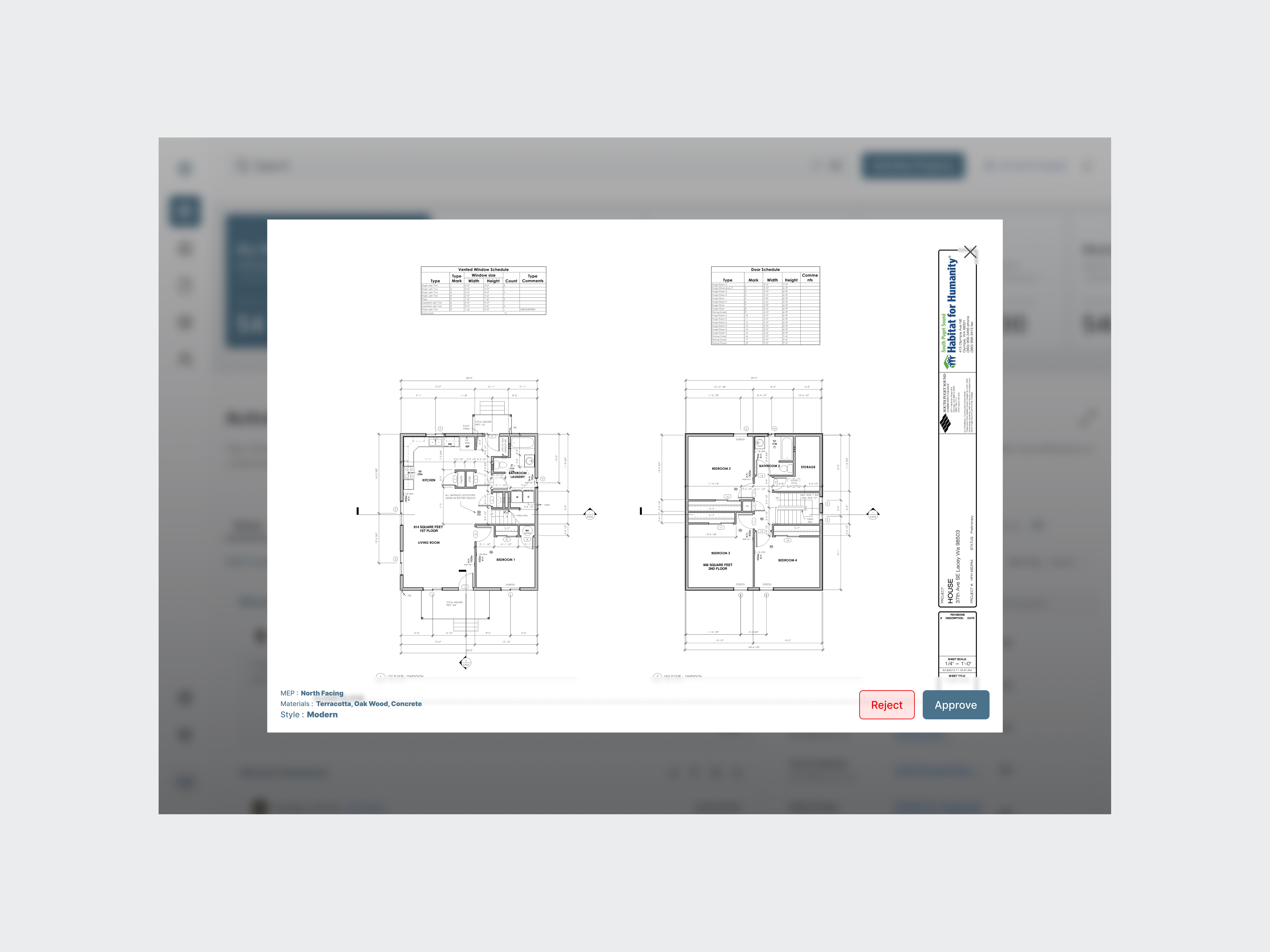
Automatic categorization of notes into tabs (Designs, Pro Forma, Compliance & Codes) organizes complex data intuitively.
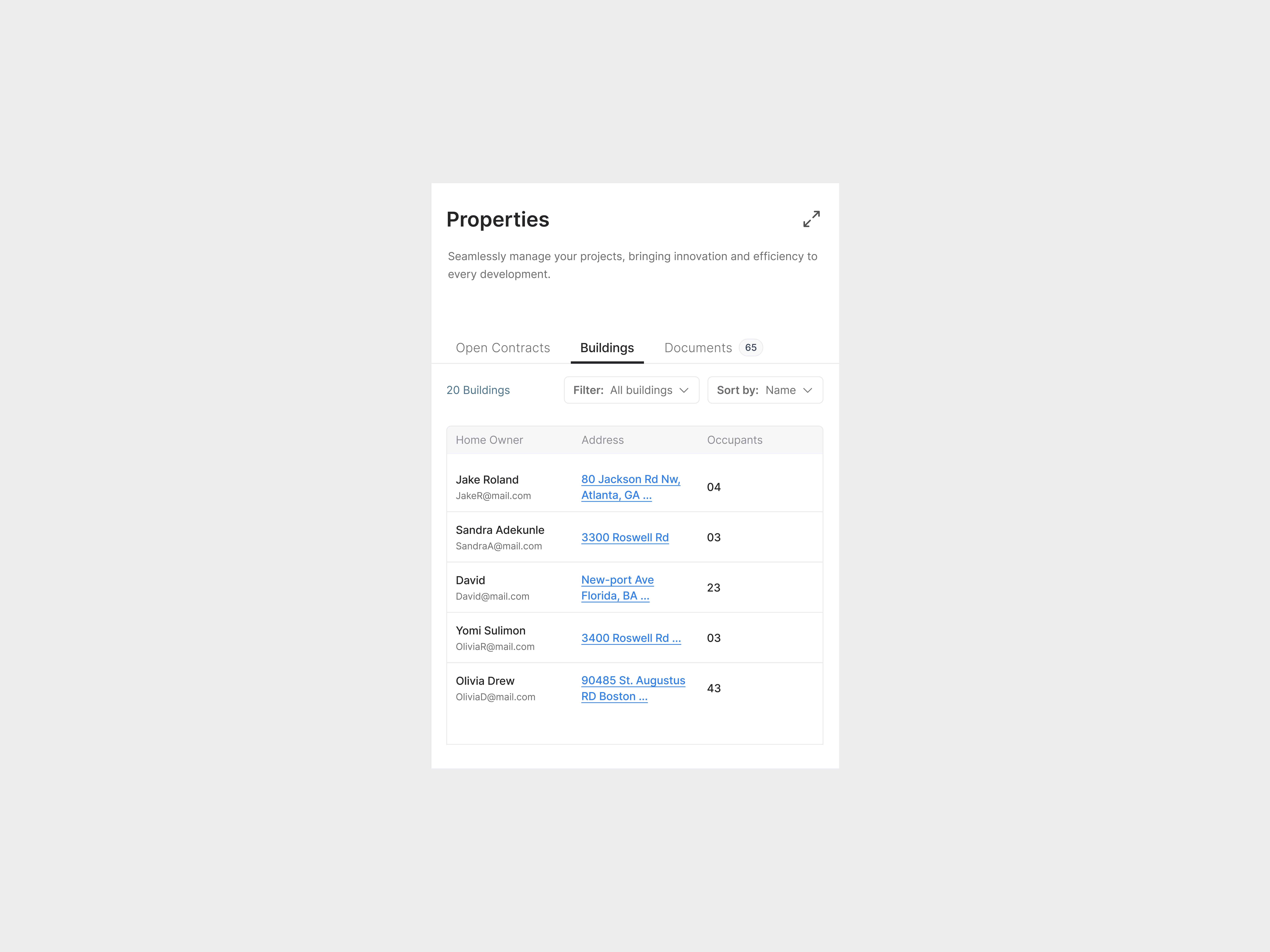
Properties section consolidates all units, owners, and addresses in one view, removing the need for manual record-keeping.
✅ Impact: Streamlines compliance management, reduces errors, and enhances accountability.
4. Consistency & Accessibility
Minimalist visual hierarchy (cards > activity feed > properties) reduces overwhelm for non-technical users.
Clear typography and contrast ensure readability even in high-stress environments (e.g., construction sites).
Expandable sections (Properties → Open Contracts, Buildings, Documents) prevent clutter while keeping information accessible.
✅ Impact: Creates a more inclusive experience for varied user groups, from executives to field workers.
Real-World Positive Impact
For Developers & Builders
Better project visibility reduces missed deadlines.
AI insights prevent costly compliance oversights.
For Homebuyers
Transparent updates build trust and satisfaction.
Direct feedback integration ensures design aligns with buyer expectations.
For the Industry
Moves construction management from reactive firefighting → proactive intelligence.
Supports scalability, allowing firms to manage dozens of properties in one unified platform.
Outcome & Value Creation
30–40% reduction in project delays through proactive compliance alerts.
Increased buyer satisfaction by integrating homeowners directly into design iterations.
Operational cost savings by eliminating redundant tools (email chains, spreadsheets).
Stronger brand reputation for developers leveraging modern, AI-powered workflows.
Smooth Scroll
This will hide itself!
This will hide itself!
AI-powered real estate and construction management platform
OVERVIEW
Mastr Byldr is an AI-driven B2B management platform designed to transform how real estate developers, construction managers, and property stakeholders collaborate. The platform consolidates project tracking, compliance, communication, and property data management into a single, intuitive dashboard. At its core, Mastr Byldr uses AI-powered insights to reduce operational bottlenecks, automating property updates, reconciling compliance issues, and enabling seamless collaboration between developers, architects, contractors, and homebuyers.
YEAR
2024
ROLE
PRODUCT DESIGNER
SERVICES
PRODUCT DESIGN
UX RESEARCH
PRODUCT STRATEGY
UI DESIGN
About the project
Problem
Real estate and construction projects are notorious for:
Fragmented communication across multiple stakeholders.
Manual tracking of compliance, codes, and design updates.
Delayed approvals due to poor visibility of ongoing work.
Data silos, making it hard to track property performance at scale.
This often results in budget overruns, missed deadlines, and dissatisfied buyers.
Solution
Mastr Byldr addresses these pain points through a centralized AI-powered management hub:
Unified Dashboard: Tracks multiple properties and projects in real time.
AI-Powered Updates: Summarizes compliance risks, buyer feedback, and project milestones.
Smart Collaboration: Bridges communication gaps between homebuyers, architects, and developers.
Seamless Data Flow: Replaces spreadsheets and email chains with structured, actionable insights.
UX Audit
1. Navigation & Information Architecture
Clean dashboard layout with cards for each property (Sky Sky Building, Riverside Homes, etc.) makes it easy for managers to scan and prioritize.
Progress indicators (+99 tasks, compliance counts, occupants) reduce cognitive load, allowing users to see project health at a glance.
Search & Filters ensure quick retrieval of notes, contracts, and updates.
✅ Impact: Reduces time-to-information, helping managers focus on decisions rather than hunting data.
2. Activity & Updates Stream
Integrated feedback loops allow homebuyers (e.g., Castor Bloom’s comment) and professionals (architect Santiago’s material suggestion) to collaborate in real time.
Contextual tagging (Home-Buyer, Architect) improves trust and clarity in stakeholder roles.
✅ Impact: Encourages transparency, speeds up decision-making, and fosters stronger buyer–builder relationships.
3. AI-Supported Property Management
Automatic categorization of notes into tabs (Designs, Pro Forma, Compliance & Codes) organizes complex data intuitively.
Properties section consolidates all units, owners, and addresses in one view, removing the need for manual record-keeping.
✅ Impact: Streamlines compliance management, reduces errors, and enhances accountability.
4. Consistency & Accessibility
Minimalist visual hierarchy (cards > activity feed > properties) reduces overwhelm for non-technical users.
Clear typography and contrast ensure readability even in high-stress environments (e.g., construction sites).
Expandable sections (Properties → Open Contracts, Buildings, Documents) prevent clutter while keeping information accessible.
✅ Impact: Creates a more inclusive experience for varied user groups, from executives to field workers.
Real-World Positive Impact
For Developers & Builders
Better project visibility reduces missed deadlines.
AI insights prevent costly compliance oversights.
For Homebuyers
Transparent updates build trust and satisfaction.
Direct feedback integration ensures design aligns with buyer expectations.
For the Industry
Moves construction management from reactive firefighting → proactive intelligence.
Supports scalability, allowing firms to manage dozens of properties in one unified platform.
Outcome & Value Creation
30–40% reduction in project delays through proactive compliance alerts.
Increased buyer satisfaction by integrating homeowners directly into design iterations.
Operational cost savings by eliminating redundant tools (email chains, spreadsheets).
Stronger brand reputation for developers leveraging modern, AI-powered workflows.
Smooth Scroll
This will hide itself!
This will hide itself!
AI-powered real estate and construction management platform
OVERVIEW
Mastr Byldr is an AI-driven B2B management platform designed to transform how real estate developers, construction managers, and property stakeholders collaborate. The platform consolidates project tracking, compliance, communication, and property data management into a single, intuitive dashboard. At its core, Mastr Byldr uses AI-powered insights to reduce operational bottlenecks, automating property updates, reconciling compliance issues, and enabling seamless collaboration between developers, architects, contractors, and homebuyers.
YEAR
2024
ROLE
PRODUCT DESIGNER
SERVICES
PRODUCT DESIGN
UX RESEARCH
PRODUCT STRATEGY
UI DESIGN
About the project
Problem
Real estate and construction projects are notorious for:
Fragmented communication across multiple stakeholders.
Manual tracking of compliance, codes, and design updates.
Delayed approvals due to poor visibility of ongoing work.
Data silos, making it hard to track property performance at scale.
This often results in budget overruns, missed deadlines, and dissatisfied buyers.
Solution
Mastr Byldr addresses these pain points through a centralized AI-powered management hub:
Unified Dashboard: Tracks multiple properties and projects in real time.
AI-Powered Updates: Summarizes compliance risks, buyer feedback, and project milestones.
Smart Collaboration: Bridges communication gaps between homebuyers, architects, and developers.
Seamless Data Flow: Replaces spreadsheets and email chains with structured, actionable insights.
UX Audit
1. Navigation & Information Architecture
Clean dashboard layout with cards for each property (Sky Sky Building, Riverside Homes, etc.) makes it easy for managers to scan and prioritize.
Progress indicators (+99 tasks, compliance counts, occupants) reduce cognitive load, allowing users to see project health at a glance.
Search & Filters ensure quick retrieval of notes, contracts, and updates.
✅ Impact: Reduces time-to-information, helping managers focus on decisions rather than hunting data.
2. Activity & Updates Stream
Integrated feedback loops allow homebuyers (e.g., Castor Bloom’s comment) and professionals (architect Santiago’s material suggestion) to collaborate in real time.
Contextual tagging (Home-Buyer, Architect) improves trust and clarity in stakeholder roles.
✅ Impact: Encourages transparency, speeds up decision-making, and fosters stronger buyer–builder relationships.
3. AI-Supported Property Management
Automatic categorization of notes into tabs (Designs, Pro Forma, Compliance & Codes) organizes complex data intuitively.
Properties section consolidates all units, owners, and addresses in one view, removing the need for manual record-keeping.
✅ Impact: Streamlines compliance management, reduces errors, and enhances accountability.
4. Consistency & Accessibility
Minimalist visual hierarchy (cards > activity feed > properties) reduces overwhelm for non-technical users.
Clear typography and contrast ensure readability even in high-stress environments (e.g., construction sites).
Expandable sections (Properties → Open Contracts, Buildings, Documents) prevent clutter while keeping information accessible.
✅ Impact: Creates a more inclusive experience for varied user groups, from executives to field workers.
Real-World Positive Impact
For Developers & Builders
Better project visibility reduces missed deadlines.
AI insights prevent costly compliance oversights.
For Homebuyers
Transparent updates build trust and satisfaction.
Direct feedback integration ensures design aligns with buyer expectations.
For the Industry
Moves construction management from reactive firefighting → proactive intelligence.
Supports scalability, allowing firms to manage dozens of properties in one unified platform.
Outcome & Value Creation
30–40% reduction in project delays through proactive compliance alerts.
Increased buyer satisfaction by integrating homeowners directly into design iterations.
Operational cost savings by eliminating redundant tools (email chains, spreadsheets).
Stronger brand reputation for developers leveraging modern, AI-powered workflows.
Smooth Scroll
This will hide itself!
This will hide itself!